
From Mechanical to Intelligent: The New Role of Drive Technology
Drive systems have always been at the heart of many machines. While the focus used to be on mechanical and electrical aspects, another factor is now taking center stage: data.
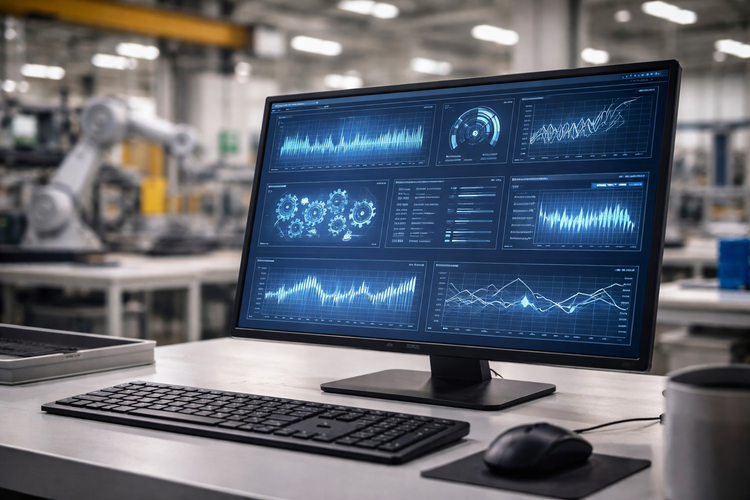
Modern drive systems are increasingly connected and continuously provide information about their condition. This makes them an integral part of smart production systems. The goal: greater transparency, better decisions, and above all, fewer unplanned downtimes.
Sensor Technology as the Foundation: Seeing What Happens Inside
The first step toward digitalization is capturing system conditions—this is where sensor technology comes into play.
Typical parameters in drive technology include:
- Vibrations (e.g., in bearings or gearboxes)
- Temperatures
- Speeds
- Load conditions
- Energy consumption
Sensors continuously deliver data on system operation, providing a precise picture of the current condition. However, data is only as valuable as its interpretation—this is where the real value of digitalization begins.
Understanding Data: From Monitoring to Real Insight
Simply collecting data is not enough. True value comes from intelligent analysis.
Sensor data is collected, stored, and evaluated to identify patterns, detect deviations, and draw conclusions about the condition of individual components.
Example:
If the vibration behavior of a bearing changes over time, it may indicate wear—long before an actual failure occurs.
Predictive Maintenance: Maintenance Before Failure
This is where predictive maintenance comes in. Instead of servicing systems at fixed intervals or reacting only after a failure, this approach focuses on one key idea: maintenance exactly when it is needed.
This is made possible by combining modern sensor technology with intelligent data analysis. Sensors continuously monitor system conditions, while algorithms analyze the data, detect trends, and identify anomalies. Based on this, systems can predict when components become critical—allowing maintenance to be scheduled at the optimal time.
The result:
- Reduced downtime
- Planned maintenance
- Lower costs
- Extended component lifespan
Both a Challenge and an Opportunity
While digitalization offers great potential, it also introduces new requirements:
- Data must be structured and properly analyzed
- Systems must communicate seamlessly
- Boundaries between IT and OT are becoming blurred
- Data protection and cybersecurity are gaining importance
Despite these challenges, digitalization opens up enormous opportunities—especially for companies aiming to optimize processes and future-proof their operations.
What This Means for You
For users in drive technology, one thing becomes clear: transparency replaces reaction.
By understanding component behavior early, you can:
- Prevent failures
- Optimize processes
- Use resources more efficiently
This is where the real competitive advantage lies.
Kern Antriebstechnik GmbH: Your Partner for the Digital Future
At Kern Antriebstechnik, expertise goes beyond individual components—the focus is on the entire system.
Whether through modern drive solutions, optimizing existing systems, or increasing transparency and efficiency, Kern supports you in making your applications future-proof.
Want to learn how to operate your drive technology more efficiently, reliably, and digitally? Let’s talk. We look forward to your project.
Contact us now